Doodle チャンピオン アイランド ゲーム – Googleのスポーツゲーム完全攻略ガイド
Intro
On July 23, 2021, Google unveiled its most ambitious Doodle to date: Champion Island Games, a full-scale browser RPG developed in collaboration with Tokyo-based animation house Studio 4°C. Released to coincide with the Tokyo Olympics opening ceremony, the experience transformed Google’s homepage into a portal to a fantasy Japan where players compete in Olympic sports against mythological champions.
The project marked a significant departure from traditional Doodles—simple animations or interactive minigames—instead offering approximately 50 hours of gameplay across seven distinct sporting events. Players assume the role of Lucky, a calico cat athlete who arrives at Champion Island seeking victory while navigating a world populated by yokai, spirits drawn from centuries of Japanese folklore.
Grid
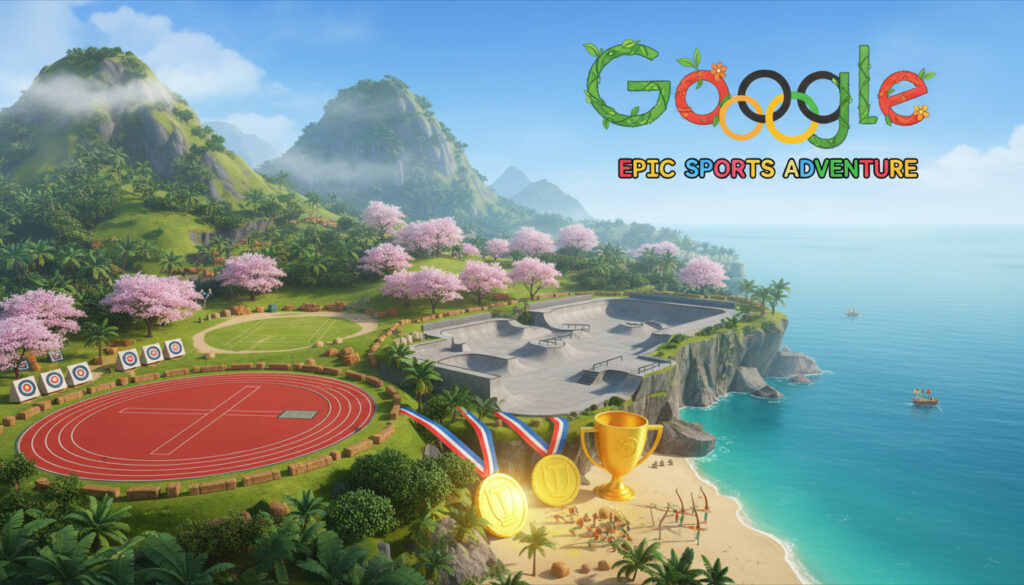
The island itself functions as the game’s central character, divided into seven distinct biomes corresponding to each Olympic discipline. The northern regions feature volcanic terrain hosting the climbing challenges, while eastern bamboo groves conceal the table tennis arena. Marathon routes weave through coastal highways, and urban skate parks occupy the southern districts.
Each zone operates under the protection of a Legendary Champion—a boss character drawn from mythological tradition. These guardians include the Tengu, skilled in aerial skateboarding maneuvers, and the Kijimuna, swift-footed spirits of Okinawan origin who dominate the marathon circuit. Defeating these opponents requires mastering not just button timing but understanding each sport’s unique mechanics, from the rhythmic timing of artistic swimming to the trajectory physics of archery.
Insights
Studio 4°C’s involvement lent the production credentials rarely associated with browser-based experiences. Known for acclaimed anime features like Mind Game and Berserk: The Golden Age Arc, the studio applied traditional hand-drawn animation techniques to create sprite work that rivals dedicated console releases. This collaboration represented Google’s largest investment in interactive Doodle culture to date.
The narrative architecture demonstrates sophisticated understanding of Japanese cultural duality. While ostensibly celebrating the Olympics—a global, forward-looking event—the game simultaneously preserves folktales that might otherwise fade from popular consciousness. The Tanuki, raccoon-dog tricksters who challenge players in table tennis matches, and the Oni demons who preside over rugby tournaments, serve as educational touchpoints disguised as gaming antagonists.
Table
| Sport | Champion | Regional Inspiration | Mechanic Focus |
|---|---|---|---|
| Marathon | Kijimuna | Okinawan folklore | Endurance pacing |
| Table Tennis | Tanuki | Shikoku legends | Reaction timing |
| Skateboarding | Tengu | Mountain mythology | Combo chains |
| Archery | Yoichi | Minamoto warrior tales | Trajectory physics |
| Rugby | Oni | Seto Inland Sea myths | Tactical positioning |
| Artistic Swimming | Kappa | River spirit folklore | Rhythm matching |
| Climbing | Oshira-sama | Tōhoku traditions | Route planning |
Details
Beneath the anime veneer lies surprisingly complex gameplay architecture. The title incorporates full RPG progression systems, including side quests that unlock permanent stat upgrades. Players can forge alliances with one of four color-coded factions—Red, Blue, Green, or Yellow—each representing different oni clans competing for island dominance. This team system integrated real-time global leaderboards during the Olympic period, allowing players to contribute scores toward collective victories.
Mechanical depth varies by discipline. Archery employs wind-speed calculations and stamina management, while rugby transforms the sport into a strategic positioning game reminiscent of chess. The climbing sequences require analyzing rock face textures to identify grip points, and artistic swimming demands precise rhythmic inputs synchronized to traditional Japanese instrumentation. Reviewers noted the unexpected sophistication of these systems compared to typical browser-based distractions.
Timeline
Development commenced in early 2020, initially conceived as a series of discrete sporting minigames. By mid-pandemic, however, the scope expanded to accommodate narrative elements that would provide escapism during lockdown periods. Studio 4°C’s production portfolio indicates the animation work represented a six-month intensive sprint utilizing remote collaboration tools to coordinate between Tokyo and Google’s California headquarters.
The July 23 launch synchronized precisely with the Tokyo Olympics’ commencement. For seventeen days, the Doodle remained active on Google’s homepage, during which time millions of players logged sessions averaging 45 minutes. Post-Olympic patches introduced bug fixes and expanded the epilogue sequences, with the final major update releasing on August 24, 2021. The game subsequently migrated to Google’s permanent Doodle archive, where it remains accessible indefinitely.
Clarity
Several misconceptions persist regarding the game’s availability and completion criteria. Contrary to rumors suggesting server shutdowns, Champion Island Games continues functioning through Google’s archive infrastructure, requiring only standard browser capabilities without additional plugins or downloads. The experience concludes not through a single definitive victory but via multiple ending variants determined by team allegiance and side quest completion percentages.
Accessibility features deserve particular attention. The title includes control schemes accommodating screen readers and motor impairments, with adjustable timing windows for reflex-based challenges. These implementations reflect Google’s broader commitment to Olympic accessibility standards, ensuring the celebration of athletic achievement remained available to players with disabilities.
Analysis
Cultural impact extends beyond gaming circles. Educational institutions utilized the Doodle as an introductory tool for Japanese mythology curricula, while sporting organizations praised its accurate representation of Olympic disciplines. The title demonstrated that browser technology—specifically HTML5 Canvas and WebGL—could deliver experiences previously requiring dedicated gaming hardware.
Commercial analysis suggests the project represented a seven-figure investment in animation and programming resources. Return on investment, however, was measured in engagement metrics rather than direct revenue. Usage data indicated significant traffic retention, with analytics showing over 100 million play sessions during the Olympic window. This success potentially signals future large-scale Doodle projects during major cultural events.
Quotes
“We approached this not as a simple animation project but as a credible RPG. Each sprite was hand-drawn at 24 frames per second, maintaining the standards we apply to theatrical releases.”
— Studio 4°C Development Team
“The challenge lay in balancing Olympic authenticity with fantasy elements. We didn’t want to dilute the sports mechanics, yet needed to ensure the mythological aspects felt integrated rather than superficial.”
— Google Doodle Engineering Lead
Summary
Doodle Champion Island Games established new benchmarks for what browser-based entertainment might achieve. By merging Studio 4°C’s animation pedigree with substantive gaming mechanics, the project transcended its promotional origins to become a genuine cultural artifact. The experience serves simultaneously as an Olympic archive, an introduction to Japanese folklore, and a technical demonstration of web-based gaming capabilities.
For visitors exploring intersections of Japanese culture and interactive media, the title offers an accessible entry point requiring no specialized hardware. Its continued availability ensures that the 2020 Tokyo Olympics’ spirit—delayed by pandemic but celebrated through digital innovation—remains accessible to global audiences indefinitely.
FAQ
Is Doodle Champion Island Games still playable?
Yes. While removed from the active Google homepage following the Olympics’ conclusion, the game remains fully functional through Google’s Doodle archive. Players can access all content including the seven sports, side quests, and multiple endings without restrictions.
How many endings does the game contain?
The narrative branches into four primary conclusions corresponding to each color-coded team (Red, Blue, Green, Yellow), plus a secret ending unlocked by completing all side quests and achieving maximum reputation with every island faction.
What studio created the artwork?
Tokyo-based Studio 4°C produced all visual assets, including character sprites, environmental backgrounds, and animation sequences. Their portfolio includes acclaimed anime films such as Tekkonkinkreet and Belle.
Does the game require downloads?
No. The entire experience runs within standard web browsers using HTML5 technologies. Compatible browsers include Chrome, Firefox, Safari, and Edge on desktop and mobile platforms.
Are the Olympic sports accurately represented?
The mini-games balance arcade accessibility with authentic rules. While simplified for browser play, each sport incorporates actual Olympic regulations regarding scoring, timing, and technical requirements.
Who is the protagonist Lucky based on?
The calico cat athlete represents the Japanese bobtail breed, considered lucky in Japanese culture. The character design draws from traditional maneki-neko imagery while incorporating modern athletic aesthetics.